About the Institute
Student Scholarships — Ronald L. Williams Memorial Fund
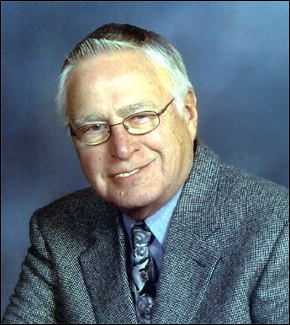 The Ronald L. Williams Memorial Fund was established in 2004 by the APhA Addiction Practitioner Interest Group (PInG) (now known as the Pain, Palliative Care, and Substance Use Disorder Community) in honor of Ron Williams who served as the long-time coordinator of the Pharmacy Section at the University of Utah School on Alcoholism and Other Drug Dependencies.
As a member of the APhA Staff from 1968 until 1998, Ron devoted his untiring attention to improving the health and careers of pharmacists who suffer from alcohol and drug dependencies. During his career, Williams was instrumental in the development of Pharmacist Recovery Programs (PRNs) that assist pharmacists and student pharmacists who have become impaired by dependence on alcohol and other drugs. Due to Ron’s efforts, countless lives have been saved throughout the years.
Student scholarships
The memorial fund, building off of initial contributions made by the members of the APhA Addiction PInG and administered by the APhA Foundation, provides two (2) $1,000 scholarships annually to student pharmacists attending the APhA Institute on Substance Use Disorders in Salt Lake City, Utah. Scholarship recipients will be required to prepare a one-page publishable report for Student Pharmacist magazine on their experiences at the APhA Institute.
All applicants must:
- Be a member of the APhA Academy of Student Pharmacists (APhA–ASP) or Student Pharmacists Community
- Provide a letter of intent (750 words) describing:
- Why they wish to receive the scholarship;
- What they expect to gain from attending the APhA Institute, and;
- How they intend to incorporate the knowledge of addiction and recovery into their academic experience and future practice.
Student scholarship application:
Scholarship applications were due on February 8, 2026.
2026 Scholarship Recipients
The APhA Institute on Substance Use Disorders Scholarship Committee selected the following recipients for the 2026 Ronald L. Williams Memorial Scholarship:
Ashlynn Elliott
PharmD Student, Class of 2028
University of Kansas School of Pharmacy
Kyle Taylor-Jones
PharmD Student, Class of 2028
Sullivan University College of Pharmacy & Health Sciences
APhA Institute Ambassador Program
Student ambassadors play an integral role in the success of the APhA Institute on Substance Use Disorders by assisting APhA Staff with the planning, development, and implementation of the program. In addition, ambassadors have the opportunity to further their knowledge and experience in the area of substance use disorders and recovery. We encourage all attendees to speak with our ambassadors if you have any questions about the APhA Institute. We are here to serve you!
Roles and responsibilities of student ambassadors:
- Attend all APhA Institute sessions and meetings
- Attend all planning/preparation sessions prior to the Institute
- Identify and introduce APhA Institute speakers
- Distribute hand-outs prior to and during lectures
- Set-up and take down audio-visual equipment
- Assist with attendee registration
- Interact with University Guest House facilities staff
- Attend daily 12-step meetings (AA, NA, and Al-Anon)
- Interact with attendees and be available to answer questions, attend to special needs, etc.
- Be available and flexible to address any issues that come up during the meeting
- Provide honest feedback to APhA Staff on ways to improve the program
Requirements of student ambassadors:
- Must have attended a previous APhA Institute on Substance Use Disorders (at least once)
- Must arrive in Salt Lake City one day prior to the official start of the APhA Institute
- Must leave Salt Lake City no earlier than 3 hours after the end of the APhA Institute
- If you are not from the Salt Lake City area, you must stay on campus, either in the apartments, dormitories, or the University Guest House
- Must facilitate your own travel to and from the airport
- Must have a cell phone that can be used for APhA Institute communications throughout the week
APhA will provide ambassadors:
- Complimentary registration for the APhA Institute
- The full cost of the Marriott Honors Community or Kalhert Village Apartments each night*
* Please note that your flight, ground transportation, meals, and incidentals are not covered by APhA.
Ambassador application:
Applications for the ambassador program were due on February 8, 2026, at 11:59 pm PT. If you have any questions about the APhA Institute, the roles of the ambassadors, or the application process for next year, please contact Jessica Marx.
2026 Ambassadors
The APhA Institute on Substance Use Disorders Ambassador Selection Committee selected the following student pharmacists to serve as APhA Ambassadors at the 2026 APhA Institute:
Anastasiya Stolyarchuk
PharmD Student, Class of 2026
Philadelphia College of Pharmacy – Saint Joseph’s University
Callie Tims
PharmD Student, Class of 2027
University of Louisiana at Monroe College of Pharmacy
APhA Institute Small Group Leaders Program
Interested in serving as a Small Group Leader for the APhA Institute on Substance Use Disorders?
We are looking for pharmacist "dinosaurs" who are willing to meet with student pharmacists and first-time attendees prior to the APhA Institute via Teams and during the brief "small group" meetings daily at the APhA Institute.
Before and during the meeting, we encourage all attendees to work directly with our Small Group Leaders if you have any questions about the APhA Institute or simply need someone with whom to talk about personal issues. In addition to Small Group Leaders, we will also have a counselor onsite for any attendees who would like to speak with a professional about any personal issues. We are here to serve you!
Roles and responsibilities of Small Group Leaders:
- Attend a planning/preparation session prior to the Institute in early May
- Attend daily 12-step meetings (AA, NA, Al-Anon)
- Interact with attendees and be available to answer questions, attend to special needs, etc.
- Facilitate a Teams meeting prior to the APhA Institute to meet and greet your small group to discuss what to expect at the APhA Institute
- Facilitate small group meetings during the APhA Institute to address topics discussed throughout education sessions and 12-step meetings
- Be available and flexible to address any issues that come up during the meeting
- Provide honest feedback to APhA Staff on ways to improve the program
Requirements of Small Group Leaders:
- Must have attended the APhA Institute on Substance Use Disorders for at least 3+ years, which may be non‑consecutive.
- Must attend all APhA Institute sessions and meetings
Small Group Leader interest:
If you are interested in serving as a Small Group Leader or have questions about the role, please contact Charlie Broussard by no later than April 27, 2026.
Support a Student Pharmacist - Make a Donation Today!
Each year, the APhA Foundation provides two (2) $1,000 scholarships for student pharmacists to attend the APhA Institute on Substance Use Disorders. We encourage you to donate to the APhA Foundation Ronald L. Williams Memorial Fund. Tax deductible gifts to The Ronald L. Williams Memorial Fund can be made online via the APhA Foundation Website.
When donating online, please specify that you would like to dedicate your gift to the Ronald L. Williams Fund.
Gifts can also be sent via U.S. Mail to:
APhA Foundation
2215 Constitution Avenue, NW
Washington, DC 20037
(Please note “Ronald L. Williams Fund” on check) or by phone through contacting the APhA Foundation at 202-429-7565.
NABP Grants for Board of Pharmacy Members
The National Association of Boards of Pharmacy (NABP) Foundation will be offering up to ten (10) $1,500 grants (for eligible attendee registration and travel costs) to qualified board of pharmacy members and staff. Grant funding is available to help underwrite the cost associated with attending the APhA Institute on Substance Use Disorders and is available on a first-come, first-served basis.
For more information or to apply for a grant to attend the APhA Institute on Substance Use Disorders, please contact the NABP Executive Office at ExecOffice@nabp.pharmacy.
2026 Grant Recipients
- James Flores, California State Board of Pharmacy
- Tabitha Edwards, Idaho Board of Pharmacy
- David G. Collins, Louisiana Board of Pharmacy
- Jabeen Ahmed, New Jersey Board of Pharmacy
- Marjan Fardadfard, Oklahoma Board of Pharmacy
- Ling Yuan, Virginia Board of Pharmacy
History of the Institute
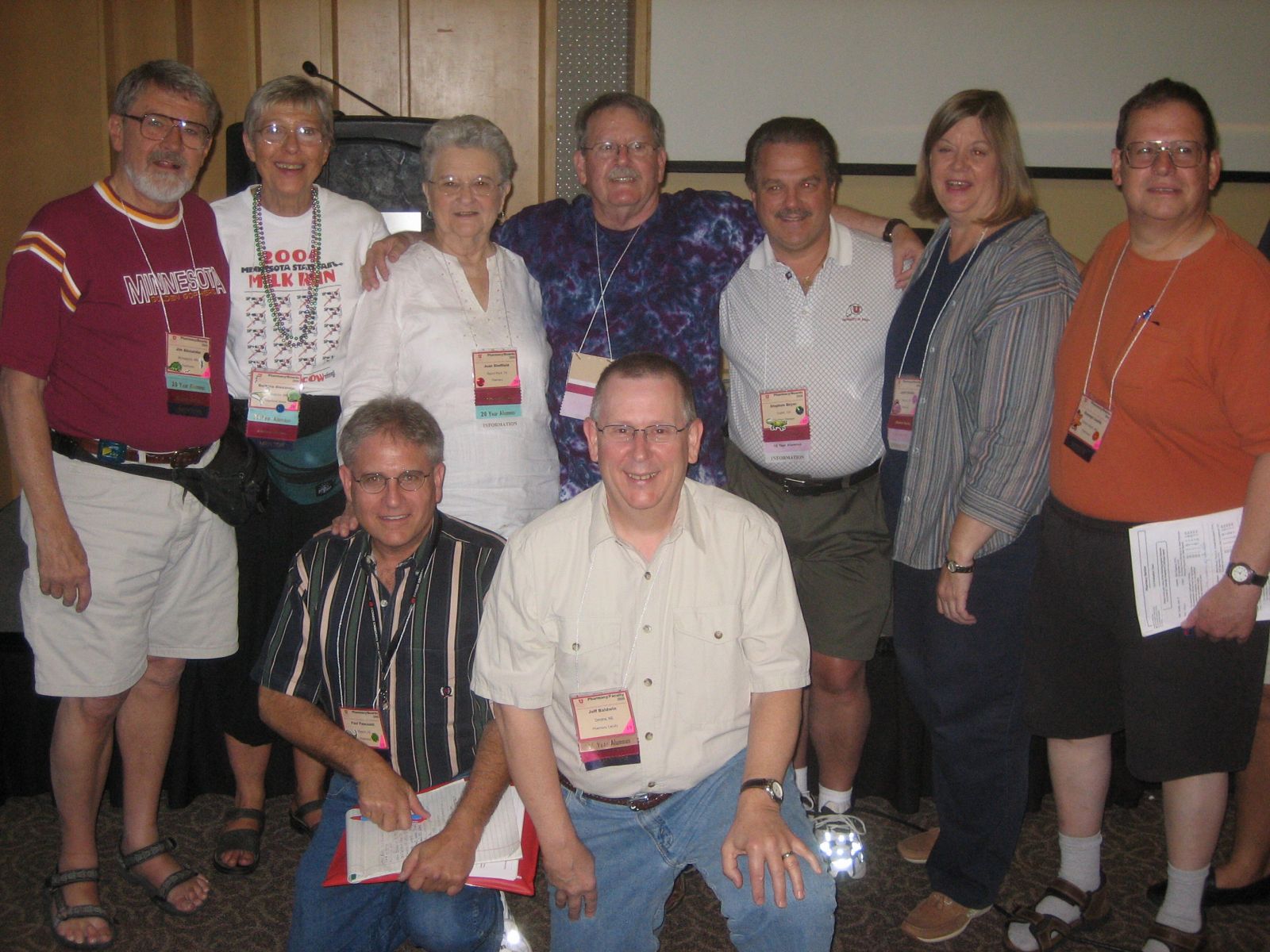 The University of Utah School on Alcoholism and Other Drug Dependencies (now known as the APhA Institute on Substance Use Disorders) was established in 1951 and throughout the years continually expanded its scope to keep pace with the increased awareness of the health and social problems of alcoholism and other drug dependencies. Upon recommendations from pharmacists and student pharmacists to the APhA House of Delegates in the early 1980s, APhA staff members Richard P. Penna and Ronald L. Williams developed the Pharmacy Section at The University of Utah School on Alcoholism and Other Drug Dependencies in 1983. Sections offered during the school included dental, nursing, physicians, professional treatment, education, and rehabilitation among others.
For 32 years, the Pharmacy Section made a lasting impact on thousands of pharmacists and student pharmacists through education on the dangers of addiction. Unfortunately, in 2014, due to scheduling conflicts, an announcement was made that The University of University of Utah School on Alcoholism and Other Drug Dependencies will no longer offer their annual conference.
In an effort to continue to provide this phenomenal experience, APhA launched the inaugural session of the APhA Institute on Alcoholism and Drug Dependencies in June 2015. The institute continues to carry the message forward to provide pharmacists, student pharmacists, pharmacy technicians, and the profession with resources, information, motivation, and guidance regarding the implementation or strengthening of state and campus-level programs to help pharmacists, student pharmacists, and pharmacy personnel whose competence to perform their responsibilities has become impaired due to SUDs.
The institute assists individuals in finding treatment, supporting them in ongoing recovery, and facilitating re-entry into pharmacy practice or pharmacy education. Institute programming provides attendees with the latest methods and techniques for working effectively toward this purpose. The institute also strives to provide a perspective for those who would like to understand SUDs even if they have not experienced it themselves. Education is planned for those who are developing or who are currently active in state-level pharmacist recovery programs, state and national pharmacy association executives, state board of pharmacy officials, pharmacists in managerial positions, college faculty and administrators, student pharmacists, leaders in firms or organizations that employ pharmacists and pharmacy technicians, pharmacy technicians, pharmacist-related employee assistance program personnel, and individuals who are concerned about SUDs among their colleagues.
Goals of the APhA Institute
Program Goals:
To serve as an introductory or refresher course and a networking opportunity; to provide information, motivation, and guidance for pharmacists, pharmacy technicians, and student pharmacists who participate in or wish to become involved in the planning, implementation, or strengthening of state-level and campus-level programs; to help and assist pharmacists, student pharmacists, or pharmacy technicians whose competence to perform their responsibilities has become impaired due to SUDs by assisting them in finding treatment, ongoing recovery, and re-entry into the practice of pharmacy or their pharmacy education; and to better prepare attendees to provide appropriate assistance and support to patients affected by SUDs.
Institute Strives to:
- Define SUDs and explain its acceptance in the medical profession as a disease.
- Explain pharmacology and pathophysiology of SUDs.
- Describe and participate in 12-step programs and other programs available to assist those who want to be free from SUDs.
- Design intervention strategies and techniques to help others break through the denial of SUDs through lecture and role-play sessions.
- Develop strategies to assist those struggling with SUDs to re-enter the pharmacy profession and recommend ways to monitor them and help them avoid relapse.
- Develop an understanding of the use and abuse of alcohol and other substances on college campuses and the importance of assisting students with a SUD.
- Name the unique problems of pain management in recovering persons with a SUD.
- Summarize the legal and ethical implications of SUDs.
- Justify the importance of self-care to succeed in a helping profession.
SUD Resources
Federal agencies/caucuses:
National programs:
Clinical programs:
Mental health and suicide prevention programs:
Pharmacy programs:
12-step programs:
Find treatment:
BeMedWise Program at NeedyMeds (previously NCPIE):